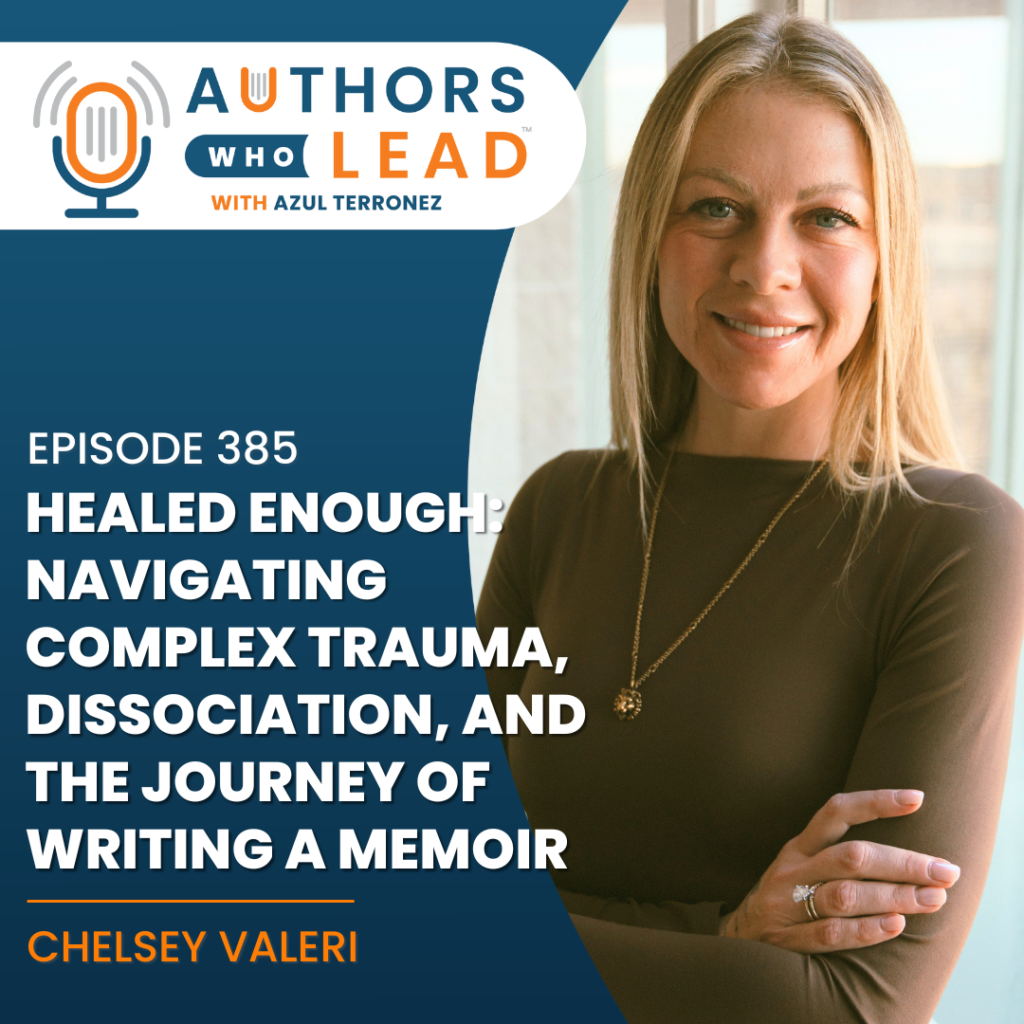
Writing a memoir is never an easy feat—especially when the story being told explores the deeply personal terrain of trauma, healing, and the reclamation of one’s agency.
In this episode of the “Authors Who Lead” podcast, I sit down with Chelsey Valeri—licensed clinical social worker, trauma therapist, and debut memoirist—as she offers an honest glimpse into how she crafted her book, Healed Enough. Through our conversation, you’ll get a multidimensional understanding of complex trauma—from both clinical and lived perspectives—and what it takes to turn such experiences into a story that resonates.
What is Complex Trauma?
According to Chelsey, complex trauma is fundamentally different from single-event PTSD. Single-event trauma typically has a clear beginning and end—think of an accident or natural disaster. In contrast, complex PTSD is born of prolonged, often interpersonal and developmental trauma, most frequently occurring during key childhood years when the nervous system is still forming. It really is an interpersonal wound and injury that takes place and is often repetitive.
One of the enduring challenges facing people with complex trauma is the lack of recognition within diagnostic frameworks. As Chelsey points out, complex PTSD still isn’t officially classified in the DSM, even as its symptoms sprawl across recognized categories like depression, anxiety, and substance use. This diagnostic gap can lead to individuals being misdiagnosed or their struggles overlooked—a reality that inspired her not just professionally, but also personally, to advocate for greater awareness and understanding.
Memoir as Healing: Deciding to Tell the Story
For those of you considering writing a memoir, especially one rooted in trauma, the decision to share your story can be fraught with doubt. Chelsey recalls questioning whether she had “enough material” or whether her life was worth documenting.
Ultimately, her journey, professional expertise, and encouragement from others led her to blend personal narrative and clinical insight. However, she was clear about her direction: this first book would focus on lived experience as much as professional analysis, offering a deeply human lens on survival and healing.
Navigating Vulnerability and Family Dynamics
A recurring obstacle for memoirists is deciding how much to share, particularly when it involves family members or traumatic events involving others. For Chelsey, years of intensive self-work allowed her to reclaim agency over her story.
She approached writing with compassion for both herself and her family: “I had to learn that harm can be caused, but it also doesn’t mean the person was trying to cause you harm.” By acknowledging generational wounds and family patterns, she found a balance that honored her own pain while respecting the complexity of those involved.
The Writing Process: From Chaos to Coherence
The process of writing Healed Enough mirrored the nonlinear journey of healing itself. Chelsey describes periods where the words flowed and others where she struggled with doubt, feeling overwhelmed by the remnants of disorder and pain.
She even wrote through major health crises—recovering from surgery and a double organ transplant—pouring the immediacy of those experiences into her manuscript. She stresses the importance of patience, a willingness to write in short bursts, and the benefit of having therapeutic support alongside the creative process.
Creating Support Systems: Healing Beyond the Memoir
Beyond the page, Chelsey pours her passion into the Healing Foundation Center in Scottsdale, Arizona, specializing in support for people with complex trauma and dissociative disorders. She’s candid about the limitations of individual therapy—no matter how experienced a therapist may be—and the need for broader, community-based approaches such as intensive outpatient programs.
The Power and Purpose of Telling Your Story
Healed Enough isn’t just about its author—it’s about anyone who’s struggled to make sense of their pain. Chelsey hopes her story will help you recognize the importance of self-agency, illuminate unspoken wounds, and encourage you to seek healing that goes beyond symptom management.
“A paragraph at a time will add up to a book,” she assures aspiring memoirists, emphasizing patience, vulnerability, and clinical support as key ingredients. Through her book and her work, Chelsey exemplifies how telling your truth—no matter how unfinished—can fuel connection, compassion, and collective healing.
🎧 Listen to the full episode with Chelsey Valeri on the Authors Who Lead podcast.
Or through your preferred platform: