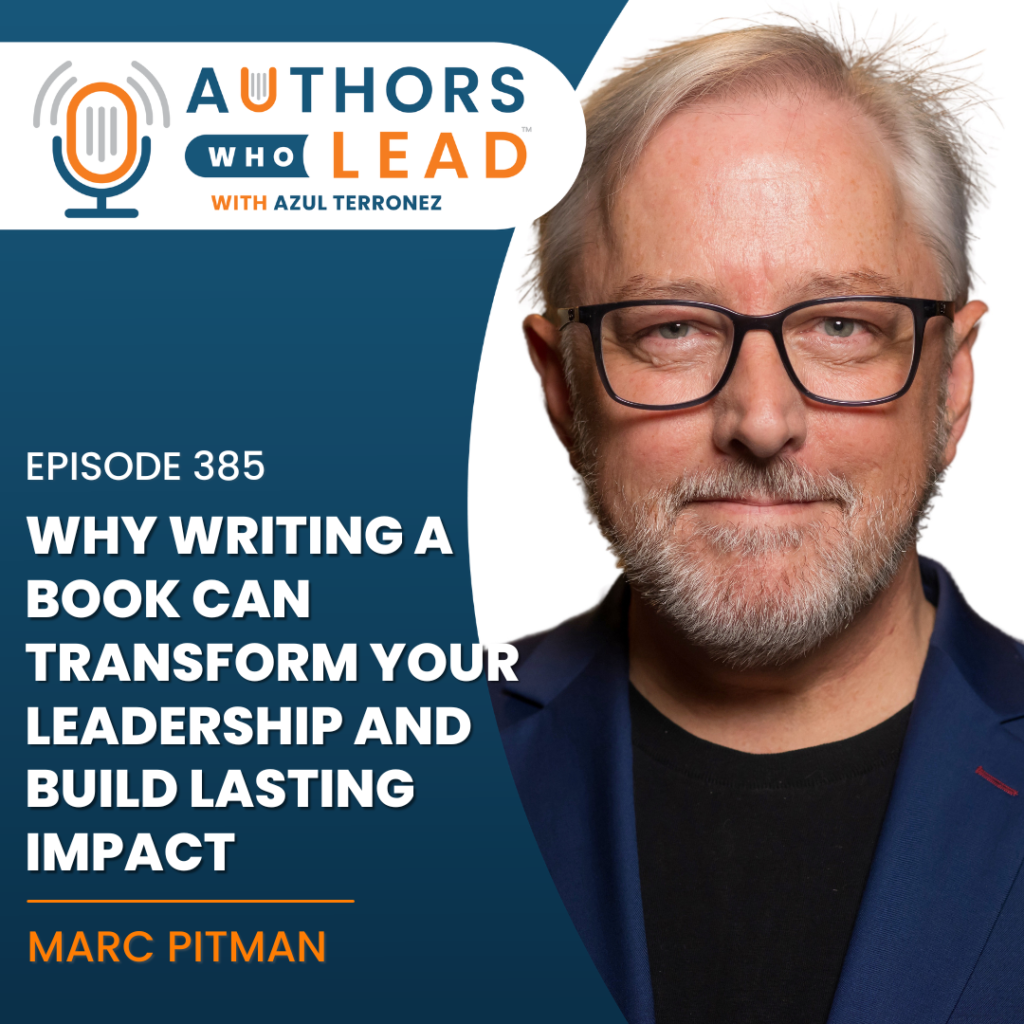
Publishing a book is often seen as a milestone—a badge of honor for accomplished leaders and coaches. But as I reveal in my conversation on the Authors Who Lead podcast, writing a book does more than boost your authority. It can crystallize your message, become a launching pad for new opportunities, and ultimately serve as a powerful legacy that outlives you.
From Childhood Homework to Impactful Authorship
For Marc, the seeds for authorship were planted early. Growing up, his parents gave him “Pitman family homework” alongside his usual schoolwork—assignments that involved reading works by Dale Carnegie, Napoleon Hill, Florence Littauer, and Les Brown. The resonance of those books, many by authors long departed, inspired him to pursue a similar legacy: “Even in my teenage years, I realized that’s the kind of impact I want for others. I’d like to have a lasting legacy.”
Decades later, that legacy took tangible shape. His first book, Ask Without Fear, wasn’t just about sharing a fundraising system—it was about making knowledge accessible and practical for real people and nonprofits. His approach to involving his audience in naming the book made them co-creators, ensuring it truly met the needs and language of his readers.
The Book as Credibility, Curriculum, and Business Builder
Many aspiring authors worry about whether they have anything new to say or whether their book will “make it big.” He debunks the myth that income flows directly from book sales. Instead, books serve as instant credibility boosters in the digital age: “There’s something about the printed matter, the credibility. The book actually feels like something that is a legitimacy test for others.”
He observes that fellow coaches without a book—even those with equivalent or better client outcomes—often miss out on high fees and key opportunities. Moreover, books can become the cornerstone for new initiatives, such as the International Coach Federation-accredited certification program he developed around his latest book. In essence, the book is “an expensive business card”—not meant strictly for profit, but designed to open doors.
Turning Doubt and Criticism Into Creative Fuel
Doubt and imposter syndrome are constant companions in the writer’s journey. Even after multiple books, he confronts questions like “Who are you to say this?” and “It’s all been said before.” For his most recent work, he went a step further—inviting editors from diverse backgrounds to ensure his leadership book was truly inclusive. The process wasn’t always comfortable, but the candid feedback ensured a book that resonates across audiences.
His advice is not to shy away from early feedback or from sharing your ideas publicly. Giving talks, workshopping content, and seeing real readers’ reactions helped him refine both his delivery and message before putting it into print.
The Mindset Shift: Books as Messages, Not Just Words
A common pitfall for first-time authors is to overstuff their book, trying to pack every insight or citation into one definitive work. He recommends focusing not on information overload, but on the core message. As I point out, “Books are messages that words are trying to hold onto so that the person can carry them somewhere else.” If the message isn’t simple, no amount of words will make it more impactful.
What makes a book powerful isn’t being the sail—on view and visible—but being the rudder, quietly shifting readers’ perspectives just a degree. Over time, that small shift can reshape their entire journey.
Getting Started: Frameworks, Feedback, and Persistence
If you’re a leader or coach considering writing a book, his encouragement is simple: Do it. But do it thoughtfully. Develop a visual framework—a model that clarifies your thinking and crystallizes your approach for the reader. Embrace honest feedback early. Be more concerned with helping your audience than with saying something that’s never been said before. And most importantly, remember that your unique experience is what readers need.
Writing a book isn’t just about being heard—it’s about leaving something behind that will light the way for others, long after you’re gone.
🎧 Listen to the full episode with Marc Pitmani on the Authors Who Lead podcast.
Or through your preferred platform:


Get a copy of Marc’s books here:
Ask Without Fear!
The Surprising Gift of Doubt