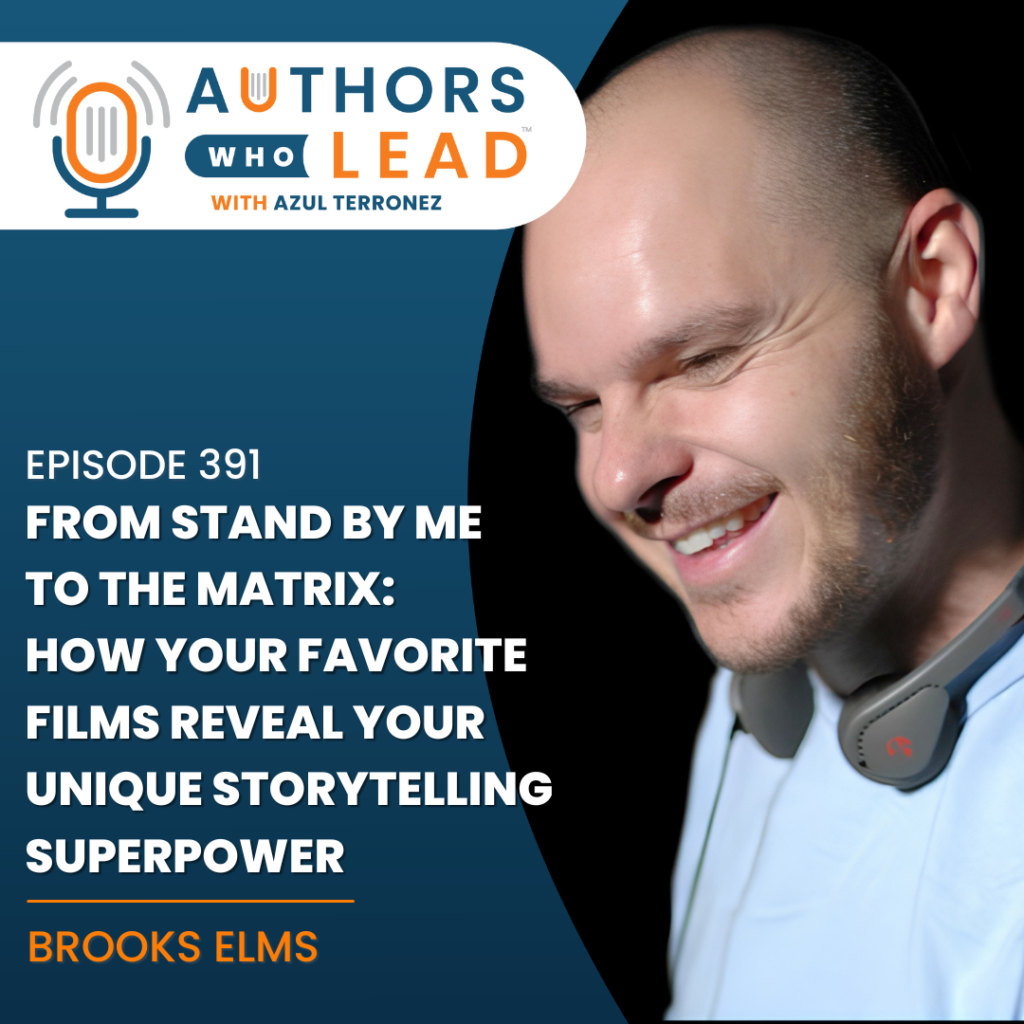
Every writer, whether penning a memoir or crafting a screenplay, seeks that elusive “voice”—the authentic expression of who they are and the stories only they can tell. On this episode of Authors Who Lead, screenwriter and coach Brooks Elms shared an illuminating process for tapping into this unique creative DNA by simply starting with a list of your favorite films.
What unfolded in our conversation was more than a coaching exercise; it was an exploration of how those stories we love most hold a mirror to our deepest values, anxieties, and dreams. If you’re looking for a practical yet profound way to connect with your storytelling core, these lessons are for you.
The Magic of Your Movie List
Brooks Elms described his “favorite films” exercise as the first of his nine-step screenwriting process—a step as fun as it is revealing. He invites writers to select ten films (or novels, or TV shows) that have stuck with them over the years—those that moved, inspired, or haunted them, even if at first glance they seem to have nothing in common.
I discovered firsthand just how challenging and rewarding this could be. With thousands of hours of film and television to choose from, narrowing down a list to just ten favorites forces us to confront what truly resonates. This curation isn’t about picking “the best” works by public consensus, but those that speak most directly to something within ourselves.
Connecting the Dots: Seeing Patterns in Stories
The real magic comes in the next step: reflecting on what each of those favorite movies has in common—not on the surface, but thematically and emotionally.
For example, in the podcast, a major insight centered on stories of invisibility, being underestimated, and the yearning to be seen or understood. “Stand By Me,” “The Matrix,” “Lord of the Rings,” and “Billy Elliot” all feature characters who are overlooked or dismissed by the world, yet ultimately display a quiet strength or unique perspective that changes everything.
Whether it’s a small-town boy, a Hobbit, or a would-be dancer in a coal mining town, these protagonists struggle with societal expectations and the pain of feeling unseen. This isn’t a coincidence—it’s a reflection of the listener’s own childhood feelings and aspirations, surfacing through story.
This exercise became a catalyst for deeper self-awareness. As Brooks noted, even stories set in fantastical worlds (like “The Matrix” or “Lord of the Rings”) are most compelling when they channel our rawest emotions—our fears, desires, and hard-won insights.
Turning Insight Into Practice: The Creative Tuning Fork
Surfacing these patterns isn’t mere self-indulgence; it’s a creative compass. Brooks likens the ten-movie list to a “tuning fork” for every artistic choice you make, whether you’re deciding on a story premise or fine-tuning a line of dialogue.
Feeling lost in a draft or uncertain if your work has emotional resonance? Go back and ask: does this story have the same core energy or contradiction as your favorites? Are you channeling, for instance, the tension between invisibility and longing that so deeply animates your personal list?
Moreover, this method transcends genre. Even if your story is set in a galaxy far, far away or in a New York fashion office, if the emotional roots are true to you, the storytelling will resonate.
Writing From the Heart: Beyond Formulas
Memoirists and novelists can benefit just as much from this exercise as screenwriters. As I pointed out, the power is not in copying plot structure, but in infusing your work with subtle, emotionally truthful details. Sometimes a single sentence—such as the line from “Stand By Me”: “That’s the year I became invisible”—carries more weight than reams of explanation.
Readers or viewers are always mining stories for reflection of their own inner lives. When a piece of writing is forged from your honest, lived experience and resonant themes, it’s far more likely to create that spark of recognition in someone else.
Next Steps: Finding Your Own DNA
The advice from our conversation is clear:
- List your ten favorite films, books, or shows—the works that have stayed with you.
- For each, note what about the story or characters speaks most to you.
- Look for recurring patterns—emotions, conflicts, character arcs—that tie them together.
Use this insight as a baseline for all your creative choices.
If you’re aspiring to write your own screenplay or simply want to write more authentically, consider reaching out to mentors or coaches who can help you surface these patterns and turn them into powerful stories.
In the end, the stories you love aren’t random—they’re your artistic fingerprint, your creative DNA. Let them be your guide.
🎧 Listen to the full episode on the Authors Who Lead podcast.
Or through your preferred platform:


Book your free session with Brooks here.