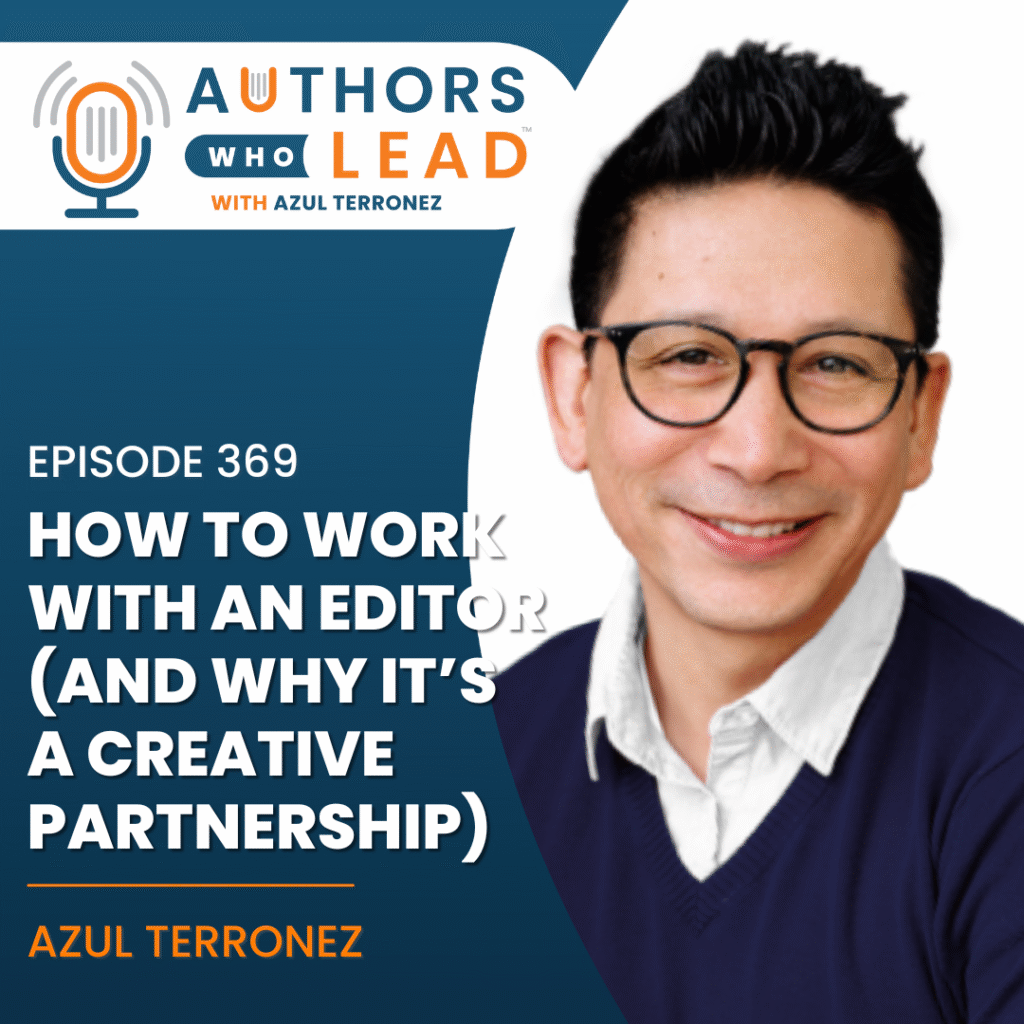
Writing a book is often seen as a solo pursuit, but as I share on the Authors Who Lead podcast, turning your manuscript into a compelling book is very much a team effort. The editor–author relationship is at the heart of that transformation. Learning how to work with editors isn’t just helpful—it’s essential for any aspiring or seasoned author. In this episode, I guide you through the stages of editing, help you choose the right editor, and show you how to collaborate effectively so your manuscript can shine.
The Editing Process: More Than Just Polishing Words
Before you consider your book “done,” you’ll likely be handing it over to another pair of eyes—an editor. For me, editing is not just about fixing grammar or catching typos; it’s about collaboration. There are different types of editing, each serving a unique purpose in the creative process.
Different Types of Editing
Developmental Editing: This is the big-picture phase. A developmental editor helps you assess whether your book’s structure, message, and flow are working. They focus on clarity, consistency, and how well the book serves the reader. If you’re unsure about your structure or whether your message truly shines, a developmental editor can be transformative.
Line Editing: Once the structure is sound, a line editor dives into each chapter, refining paragraphs, transitions, tone, and voice. They ensure the narrative flows and that every section contributes meaningfully to the overall narrative.
Copy Editing: At this stage, attention turns to the technical details—grammar, syntax, word choice, and adherence to publishing standards like The Chicago Manual of Style. A copy editor sharpens the language, catches patterns, and ensures clarity.
Proofreading: This final pass catches typos and small errors that slipped through earlier stages. It’s the polish that makes your book ready for readers.
Finding the Right Editor: It’s Like Choosing a Dance Partner
Choosing an editor isn’t just about reviewing resumes or testimonials—it’s about finding someone who understands your voice and your vision. I like to think of it as choosing a dance partner. Just because an editor worked well with another author doesn’t mean they’ll be the right fit for you.
Ask Questions: Find out what kind of editing they specialize in and how they communicate.
Consider Background and Style: An editor’s background—whether in genre or language—can shape how they edit your work.
Referrals and Reviews: I often recommend platforms like Reedsy for vetted professionals with solid client feedback.
Balancing Budget and Expertise
Your budget matters, but editing is one of the most valuable investments you can make in your book. If you’re using platforms like Fiverr or Upwork, sort by top-rated editors and check for consistent, detailed reviews. Remember: good editing elevates your voice—it doesn’t erase it.
Preparing Your Manuscript: Self-Editing Before Submission
Before you hand your manuscript to an editor, give it your best polish. I always encourage authors to read their manuscript out loud. It’s a simple but powerful way to catch awkward phrasing, missing transitions, or unclear ideas. I treat self-editing like an event, not a chore—it keeps my focus sharp and helps me hear my words the way readers will.
Embracing the Editorial Dance
Every stage of editing makes your book stronger, but the real magic happens when you see your editor as a creative partner. Think of your editorial team as dance partners, each moving with you to bring your best work forward.
Writing the book is just the beginning—collaboration is where transformation happens. Embrace the process, trust your partners, and watch your manuscript become the book you were always meant to write.
Have a book in your heart? Remember, it’s not just your story—it’s a collaboration waiting to happen.
Join us again next week for more captivating insights from influential authors and publishing experts. Remember to subscribe to Authors Who Lead and visit our website for more show notes and past interviews.
That’s all for this week. If you have a message inside of you that needs to be written, today is the day to start. Don’t delay—take action.
Episode Resources
Connect with Azul here:
Authors Who Lead
AWL Membership Community
TEDX
Fiction with Purpose Group
Mandala Tree Press Publishing
AWL Coaching Programs
Born to Write, Scared to Start
Five-Day Writing Challenge
Get a copy of Azul and Steve’s books here:
The Art of Apprenticeship
Gone Missing (Adventures in Cinder Bottom)
Greenbrier River (Adventures in Cinder Bottom)