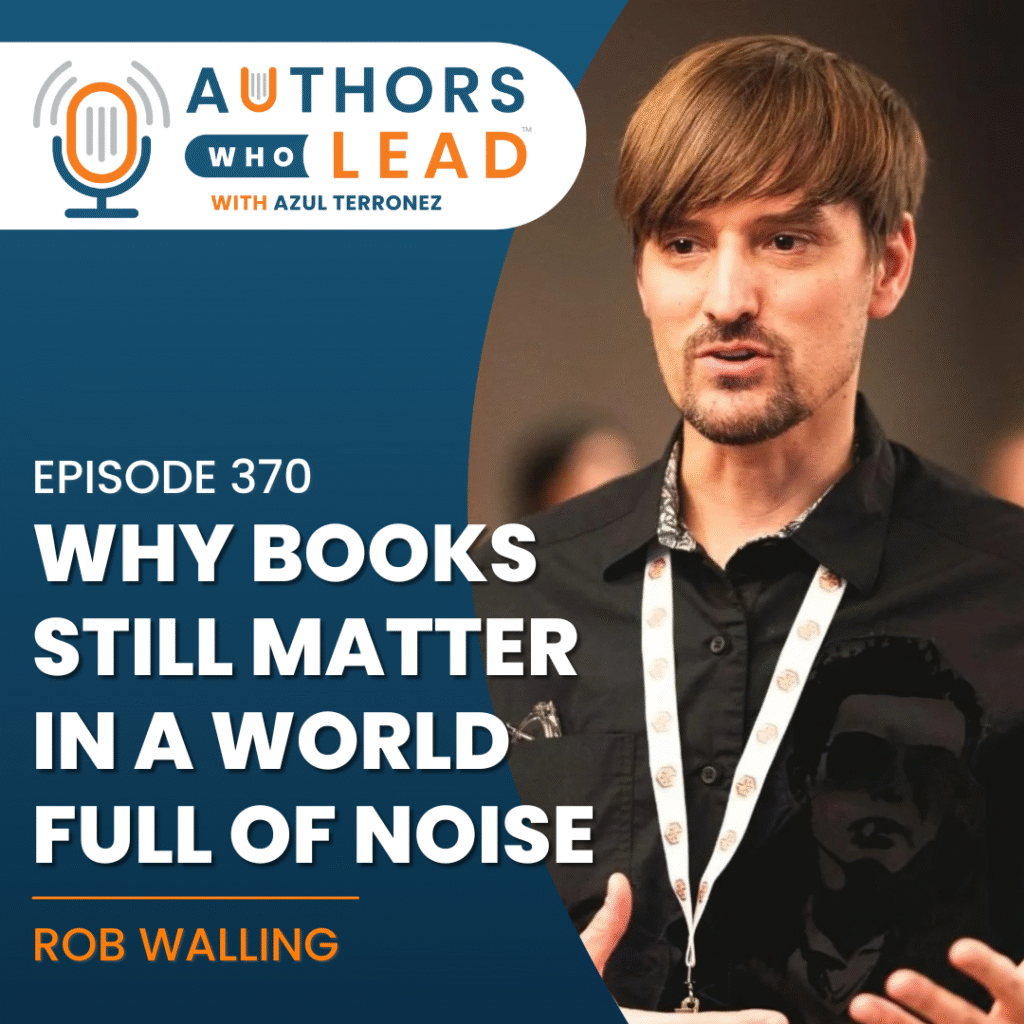
In a world where everything online disappears in 24 hours, why are books still the thing we remember?
I recently sat down with Rob Walling — a serial entrepreneur who has started six companies, bootstrapped five of them, and written multiple bestselling books, including Start Small, Stay Small and The SaaS Playbook.
What struck me most in our conversation wasn’t just his track record. It was how deeply he believes in books as a creative act and a lasting force in a noisy world.
Ephemeral vs. Enduring
Rob has been publishing online for a long time.
He blogged for years. He launched a podcast back in 2010. He’s built communities, membership sites, and software companies.
But he told me something that might surprise a lot of founders and creators:
“Most things online are ephemeral. Books are what last.”
He watched it happen in his own life.
When he released Start Small, Stay Small back in 2010, it wasn’t his biggest project. It was, in his words, “almost a side thing.” He had already been writing essays, recording podcasts, and sharing ideas.
Yet it was that book — a 200-page self-published title on bootstrapping software — that quietly became the work many people know him for.
Fifteen years later, it still sells. It still gets recommended. It still puts money in his pocket and ideas into people’s lives.
That’s the difference between “content” and a book.
Content passes through the feed.
A book sits on the table, on the shelf, or inside a mind that keeps returning to it.
The Creative Itch Doesn’t Go Away
Listening to Rob, it was clear that he doesn’t write books just because they’re good for business. He writes because he’s a creator.
Before startups, he wrote fiction.
In college, he played in bands.
These days, he still picks up a guitar when the camera turns off.
That creative thread runs through everything he does — including his companies, his products, and his books.
He told me:
“For me, creativity is the blank slate and putting something I’m super proud of into the world. And I want people to consume it and get value from it.”
Books, for him, sit at that intersection:
They’re deeply creative, but they’re also deeply useful. They compress decades of experience into something people can actually finish and act on.
And that’s where many founders and leaders get stuck. They either think a book has to be pure art, or they think it has to be a dry manual. Rob reminds us it can be both: a crafted container for our most important ideas.
Validation Before the Book
One thing I appreciated in Rob’s story is how he didn’t disappear into a cave to write his first book.
He validated the idea.
Before he wrote Start Small, Stay Small, he put up a simple landing page with one line aimed at a very specific niche: developers who wanted to start bootstrapped startups without venture capital.
He collected around 500 email addresses from people who resonated with the idea. He listened to the questions they asked. He paid attention to the essays and episodes that got the strongest response.
By the time he sat down to write the book, he wasn’t guessing.
He was organizing and deepening what his audience was already hungry for.
That’s a lesson for any coach, entrepreneur, or leader thinking about writing a book:
- Don’t start with a blank page.
- Start with real conversations.
- Start with the questions your people keep asking you.
The book becomes a way to answer those questions with depth and structure.
Books in the Age of AI
We also discussed AI and its potential impact on the value of books.
Rob’s view is grounded and refreshing. AI might help generate content faster. It might even write passable how-to material. But the books people keep recommending and rereading are still rooted in human experience, human judgment, and human voice.
He pointed out something important: in a world where AI can generate more and more anonymous “content,” readers will lean even more toward creators they trust by name.
Your book isn’t just a container of information.
It’s an extension of your character, your choices, and your lens on the world.
AI can remix patterns.
You’re the one who has lived the story.
The Long Game of Impact
One of my favorite parts of this conversation was when Rob talked about the feedback he gets from readers.
He saves the emails where people tell him his book changed their life, helped them become a founder, or gave them the courage to start. Those notes matter to him. They keep him going when the writing process feels slow and painful.
Because make no mistake — writing a book is not efficient. Rob pointed out that he can record a 30-minute podcast and reach tens of thousands of people within weeks. A book can take years to write, and years more to fully ripple out.
And yet he keeps writing them.
Why?
Because books are where ideas settle.
Books are where we commit to a deeper level of craft and clarity.
Books are where a leader steps forward and says, “This is what I believe, and I’m willing to stand behind it.”
What This Means for You
If you’re a coach, entrepreneur, or leader, and you’ve been wondering whether you have a book in you, Rob’s story offers a few simple invitations:
- Notice the ideas that won’t leave you alone.
- Pay attention to the questions people keep asking you.
- Start sharing your thinking in public — through podcasts, articles, talks, or posts.
- When you see what resonates, organize it into something deeper.
A book is not just a project to check off your list.
It’s a mirror of your leadership and a bridge to the people you’re meant to serve.
And in a world where everything else gets swallowed by the scroll, that kind of work still matters more than ever.
Join us again next week for more captivating insights from influential authors and publishing experts. Remember to subscribe to Authors Who Lead and visit our website for more show notes and past interviews.
That’s all for this week. If you have a message inside of you that needs to be written, today is the day to start. Don’t delay—take action.
Episode Resources
Connect with Rob here:
LinkedIn
YouTube
X/Twitter
RobWalling.com
Get a copy of Rob’s books here:
The SaaS Playbook: Build a Multimillion-Dollar Startup Without Venture Capital
Start Small, Stay Small: A Developer’s Guide to Launching a Startup